Thursday, November 8, 2012

Pennsylvania Tries to Improve SREC Market With New Legislation

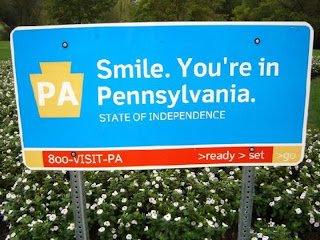
A new bill was introduced in the Pennsylvania State Senate in August intending to improve the declining solar renewable energy credit (SREC) market in the Keystone State. A bill suggesting similar improvement had stalled in the House in 2011 (HB-1580), but Senator Dave Argall (R-29) is trying to kickstart the SREC market through legislation in the Senate. 
This new version of the  Senate Bill includes a:
-new timeline structure for the AEPS growth and decline from now until 2025, including an increase to the Alternative Energy Portfolio Standard (AEPS) solar carve-out requirements from 2013-2015.
- change the alternative compliance payment (ACP) to $285/SREC for compliance in years 2013-2019 then reduce the ACP by 2% each subsequent reporting period
- change to eligibility requirements for renewable energy producers, to allow for solar thermal facilities

Notably, however, this version of the Bill no longer includes language to close the market to out-of-state systems, which has historically been what spares an overwhelmed SREC market in the past. So, now two questions remain: 
1) will this watered down senate bill garner the support it needs to become legislation and 
2) if it does, will it be able to improve the SREC market without closing out other states? 


Wednesday, November 7, 2012

ITC Makes Decision- Chinese Solar Gets Tariffs

Is this the end of the discussion? The International Trade Commission (ITC) voted unanimously that the imports of solar cells from Chinese manufacturers are harming U.S. solar manufacturers. The ruling will result in tariffs being added to any solar modules that include parts made in China. The ITC, however, did find any critical circumstances in this case, and therefore no tariffs will be applied retroactively.

This issue is far from black and white, as this article in Renewable Energy World, points out. Much like the classic debate of free market vs protectionism, new tariffs or restrictions will make new winners and new losers.

For instance, some US companies that currently import Chinese parts fear that they will shoulder the burden of these new tariffs. As E.L. "Mick" McDaniel, Managing Director of Suntech America said "the continued growth of trade barriers represents a serious challenge to the U.S. solar industry, for American jobs, and for energy consumers globally."

The underlying issue, however, is why the tariffs are even being considered. The ITC, is not reviewing the case simply for a "buy American" policy, but because there is a strong belief that Chinese companies are benefiting from Chinese government subsidies that throw that global solar market out of balance. Without something (like the US government) correcting for those imbalances, some might argue, US companies can't compete. As Gordon Brinser, President of SolarWorld America said, "Commerce's decision raises the industry's chances of reclaiming footing for domestic, sustainable and environmentally sound solar -technology producers and their jobs."

That being said, however, the tariffs would certainly add an additional incentive for American companies to "buy American." Where do you stand on this trade issue? Is this the way to make American solar companies and jobs competitive? Or is there a better way?


Tuesday, November 6, 2012

(Oil) Money Can't Buy You Love But Renewable Energy Can Earn It

The fossil fuel industry has spent millions of dollars to keep themselves on the top of the energy game. But Election 2012 proved that money does not buy you happiness- at least for the fossil fuels. According to this article on the Huffington Post, by mid-September, oil, gas and coal companies had spent more than $150 million on campaign ads. In one week alone, Texan oil barons donated $10 million to Governor Romney. At the current rate, by the end of the election- well over $200 million will be spent trying to put pro-fossil fuel politicians in office.

Ohio- Senator Sherrod Brown ran on a record of supporting renewable energy and environmental protections and was re-elected for a second term.
New Mexico- Martin Heinrich- a clean energy advocate, beat out Representative Heather Wilson- a pro- drilling, anti-climate action candidate for a Senate seat.
Virginia- Governor Tim Kaine, with a proven record in favor of clean air and environmental standards, kept his seat despite fossil fuel companies pushing hard (financially) for his opponent.

These advocates might have survived the onslaught from the fossil fuel lobby- but they aren't the only clean energy advocates America put in office on Tuesday.

Steve King and Tom Latham- both from Iowa, Dean Heller from Nevada and Dave Reichart from Washington all won re-election this year and all are big wind power advocates.

So here we are- post election. Pro- clean energy and renewable energy advocates have prevailed. The voters have spoken and a majority want more renewable energy and environmental protection. We can all breath a sigh of relief. But there's no time to rest on our laurels.

Now the real work starts. 

Friday, October 26, 2012

Notable Quotable

I'd put my money on solar energy... I hope we don't have to wait until oil and coal run out before we tackle that." - Thomas Edison, 1931


just something to think about


Thursday, September 27, 2012

Milwaukee Shines Solar Loans

I had the pleasure of sitting in on a webinar about the Milwaukee Shines Solar Loans Program, where folks with Milwaukee Shines and the Midwest Renewable Energy Association discussed the pilot program implemented through the summer of 2012, lessons learned, and upcoming replication of the opportunity.


Milwaukee has been named a US Department of Energy Solar America City, and in 2012 the city became a part of DOE’s Sunspot rooftop solar program. Through the Sunspot Rooftop Solar Program, Milwaukee has promised to reduce the cost of photovoltaic panels, including the permitting process, financing, net metering and interconnection processes and zoning.

To achieve these ends, Milwaukee introduced the solar purchase program, Solar Power Pack (SPP). The goals of the SPP are to
1) Educate customers
2) Create a lower cost for customers
3) Create more jobs and sales leads for local solar industry
4) Create more business for local industry

Read more after the jump for a full summary of the webinar and additional contact information for further follow up!

Saturday, September 1, 2012

Water Food Energy Nexus


how water, food and energy are interconnected in a 4 minute video. 

Thursday, August 30, 2012

why we should care about food security

as I'm sure you've noticed, the focus of this blog thus far has primarily been energy. the goal is to share developments in renewable energy markets, policy and research both domestic as well as abroad. but if you take a step back, you can see that the underlying interest in renewable energy is really based in an inherent desire to thrive as a humanity in a sustainable fashion. we see a major solution to that end goal- as renewable energy.

but i'd like to venture away from energy for a second and talk about food security. surprisingly enough, however, i'm not venturing very far. folks focused on the various issues like energy, water conservation, food security, etc are consistently seeing connections in each others work. and as we keep learning it is becoming clear that only by approaching all of these issues can we find sustainable solutions to any one of them.

Rufo Quintavalle writes about this trajectory for food security in his article in the Stanford Social Innovation Review titled, Food Security 3.0: The environment is the fifth pillar of international food security.

Quintavalle explains that originally food security was thought of simply as "we must produce more food." He calls this Food Security 1.0. Recently, however, the international community acknowledged that food security was actually a more complex issue. They decided that there are actually four pillars to food security, and Quintavalle calls this Food Security 2.0:  1. availability: food must be available 2. accessibility: people must be able to access the available food 3. utilization: people must be able to utilize the food through adequate infrastructure for cooking, cleaning and preparing 4. stability: these things must be true at all times- even through times of crises.

And now a new element is starting to be understood by those focused on food security, a development Quintavalle calls Food Security 3.0. Food security depends on environmental preservation. As land becomes eroded with chemicals and farming, and water becomes scarce- overproduction is threatening the environment. and as much as underproduction threatens humanity, so will a depletion of resources. and thus a new movement to incorporate environmental consideration in food security measures is borne.

as policy makers, voters and global citizens, we can no longer ignore the interconnectedness of our environment, our energy needs and our food security. which means, as someone interested in energy access and environmental stewardship, i just might wander into food security issues a couple more times in the near future. hope you'll follow!


Friday, July 27, 2012

Prison Cells Host Solar Cells

"The Rock" is famous for being inescapable. But now it has a new claim to fame. It's the newest success of the National Park Services and US Department of Energy's National Renewable Energy Laboratory joint effort to bring clean energy to national parks and landmarks. Alcatraz Prison has gone green.

For the past 75 years the prison has been powered by diesel fuel ferried across the bay. But this year, Alcatraz installed 1,300 solar panels to power the tourist attraction. The roof of the main Cellhouse building is now home to a 307 kW photovoltaic array and two 2,000 amp hour battery strings and an inverter plant. The system will produce close to 400,000 kW a year and will reduce carbon dioxide emissions by about 337,000 kilograms a year. And as if that wasn't enough, the pv project only costs about 71 cents a kW hour- including the captial costs of buying and installing the solar panels.

Read more about the installation and the process in any of the articles listed after the jump.

Tuesday, July 24, 2012

New Jersey passes encouraging legislation

Governor Christie signed Assembly bill A2966 into law this week to diversify New Jersey's energy supply and encourage the solar industry's role in energy production. Renewable energy advocates hope that more states will adopt more aggressive legislation like this to address oversupplies of solar renewable energy credits, stabilize solar markets and incentivize the infant renewable energy industry. According to the Solar Energy Industries Association (SEIA), this particular legislation will address:

1. Accelerate the Solar RPS requirement
2. Reduce the solar alternative compliance payment
3. Defines program eligibility for grid-connected projects
4. Establishes SREC program eligibility for grid-connected projects
5.  Promotes development of projects located on brownfields and landfills
6. Authorizes aggregated net metering for certain public entities
7. Extends the shelf life of SREC's

Read more about this legislation and the issues it will specifically address in this article on the SEIA's website.


Friday, July 20, 2012

International Collaboration

Jon Woodhead over at the Guardian wrote a nice piece this week about successful collaborations of Governments, NGOs and leading companies teaming up together to promote sustainable energy. Woodhead points out the massive commitments the international community has made towards providing access to modern affordable energy. As he say as he says “providing universal energy access by 2030 is estimated to increase global energy demand by 179m tonnes of oil equivalent with 54% of this increase based on fossil fuels.”

But what if that new demand was met with renewable energy? Woodhead points to the UK based organization SolarAid which is using solar light to reach unelectrified communities. Read Woodhead’s whole article, Joining forces to achieve sustainable energy for all, to learn more about the global goal of providing modern affordable energy to everyone and the cutting edge collaborations that are working towards fulfilling that heroic commitment. 

Wednesday, July 18, 2012

Solar App for your Phone


Onyx Solar just released a free app for your smartphone (android or iPhone). This cool new app allows you to calculate the energy produced by a photovoltaic installation, the hours of light generated, CO2 emissions avoided and even the distance traveled by an electric car with the energy generated by the PV installation.

Sure this app is fun for those of us with PV panels installed- we can budget, estimate, show off our energy production and money savings. But one of the best things about this cool new tool, is that you don't need an installed system to use the app. You plug in the chosen technology, and details about the area you have in mind, and it will calculate the potential energy production.

This app can be used to compare products, estimate savings, and illustrate in numbers exactly how much energy you can produce with renewable energy.  Everyone from consumers, to producers to advocates and educators could use this app to add to discussions of renewable energy production.

Monday, July 16, 2012

Renewable Energy Financing: Crowdfunding and MLPs

Ron Pernick, the co-founder and principal of Clean Edge, a research and advisory firm for the clean energy sector, wrote a piece for Renewable Energy World, titled Crowdsourcing, Limited Partnerships and Other Tools for Financing our Clean- Energy Future. The piece analyzes two promising avenues for financing clean technology in the 21st century; one a traditional financing mechanism, the other a brand new- but potentially game changing tool.

The first, a Master Limited Partnership (MLP), relies on traditional capital models that have been historically employed for fossil fuel energy production. The MLPs trade like corporate stock, and allow investors to earn dividends. In terms of MLPs, however, current legislation is antiquated and is only applicable to oil and gas. However, as Pernick points out, there is reason for optimism in the clean tech world, as legislators start to acknowledge the gap, and attempt to address it. For instance, Senator Chris Coons (D- Delaware) has introduced the Master Limited Partnerships Parity Act, which would let MLPs include renewable energy.

The second, crowdfunding, allows thousands of investors to provide small investments that add up to millions. The crowdfunding (or crowdsourcing, or peerfunding) model democratizes the financing process of solar installations. An example is Solar Mosaic, which is the first of its kind, but uses the KickStarter model to finance solar. Solar Mosaic provides an online platform that could raise millions of dollars from thousands of investors with the potential of a decent return.

Read more about these two options in financing clean energy in Pernick's article.

Friday, July 13, 2012

NRDC Assesses India's Solar Progress


Natonal Resources Defense Council (NRDC) published a new report assessing the progress of Phase 1 of India's National Solar Mission: Laying the Foundation for a Bright Future. The report analyzes available funding, political support and current and planned projects- country-wide. As the NRDC says, "even with 300 sunny days a year in most regions, creating a new solar energy market in India is no easy task." The report provides recommendations to scale grid-connected solar energy development, and is a great start for anyone interested in building solar panel systems in India's burgeoning market. 

The assessment presents research, and findings from stakeholder discussions to highlight major achievements of Indian State's efforts thus far. These achievements range from generating solar energy from panels mounted on a body of water, in Gujarat to creating policy in Odhisha to target 3000 villages for renewable energy electrification by 2014.  In Phase 1 of installations the states of  Rajasthan and Gujarat took the lead, but a the market grows many states are poised to take that lead in Phase 2. Read the whole report here. Or if you're looking for just a quick rundown- check out this factsheet the NRDC produced.

Thursday, July 12, 2012

Solarize Connecticut

The Connecticut Clean Energy Finance and Investment Authority (CEFIA) will be implementing a Solarize Connecticut Program this summer. The Solarize Connecticut pilot program is based on its successful Massachusetts counterpart. It will encourage the adoption of solar photovoltaic (PV) projects through coordinated education, marketing and outreach efforts, coupled with a tiered pricing structure that provides savings as more homeowners choose to install solar panels.

CEFIA published a Request for Information (RFI) as the application for Connecticut municipalities to express interest in participating in the program. This competitive review process required applicants to demonstrate a clear commitment to increase education and outreach through community groups and resident volunteers. They were also required to illustrate a willingness to streamline their permitting process. Depending on their progress with renewable energy at the time of application, municipalities were either labeled "Clean Energy Communities", or they chose to take a "Municipal Clean Energy Pledge" to demonstrate their commitment. Through the competitive application process CEFIA chose four towns to pilot the first phase of the Solarize Connecticut program in 2012, which include Durham, Fairfield, Portland and Westport.

Details of the program are being fine-tuned this summer, and CEFIA will begin promoting the program at more length starting in August. Phase II of the program will include four more towns, and begin in early 2013.

You can read about Westport's activities in particular in Chase Wright's article Westport Selected for Solarize Connecticut Or go directly to the source, and check out the CEFIA's Solarize Connecticut page.

Tuesday, July 10, 2012

Michigan Dukes Out 25x25


Michigan voters have decided to put a constitutional amendment on their ballot in November. The 25x25 initiative got 550,000 signatures, (surpassing the 322,000 signatures necessary), making it eligible for the November ballot. The 25x25 initiative would require energy providers to produce or purchase 25% of their electricity from renewable sources by 2025. Eligible energy sources include biomass, hydro-power, solar energy and wind. The amendment even includes a provision that limits the utility customers' annual rate increases to 1%, ensuring the customer isn't responsible for covering renewable energy costs to the utility.

Of course the bill has found opposition as well as supporters. Both the Michigan and Detroit regional chambers of commerce oppose the bill. But many view the issue as pitting utility companies and their employee unions against energy entrepreneurs and renewable energy advocates.   Currently Michigan has a goal to make 10% of electricity production from renewable sources- and the two largest utilities in Michigan claim that they are on track to reach that goal by 2015. However, they feel the 25x25 goal is unrealistic. According to them, it will take 3,100 more wind turbines spread over an area 17 times larger than the city of Grand Rapids to reach the goal. And it will cost the utilities companies $12 billion. Regardless of how biased those numbers might be,  given how little renewable energy is currently being produced in Michigan today, perhaps its that very investment the state needs.

Michigan has no large scale renewable energy production facilities in operation, in construction or in even in development. The state only has 400 mW of wind capacity installed -and with the vast coastlines the state boasts, it has massive potential for a thriving offshore wind industry. The strong manufacturing base and skilled workforce eager to tap into any areas of growth- make Michigan ripe for a renewable energy manufacturing and generating industry. On top of all of that, Michigan currently outsources most of its energy production to other states: it spends $1.8 billion for out of state coal- which accounts for 60% of its electricity consumption. In the case of energy- it's safe to say Michigan is under performing. But is the 25x25 the key to unlocking that wasted potential?

The opposition claims cementing the goal into the states constitution limits future flexibility. They have also estimated that it will cost the state $10 billion to implement. Interestingly enough, supporters have claimed the 25x25 initiative will attract $10 billion in investment to the state. So apparently we all agree it will cost $10 billion to reach the 25% goal- and now the question is who will pay?  Supporters have pointed to other states with similar goals, like Iowa with a 21% goal, to show that significant cost increases aren't an inevitable result of a renewable energy portfolio like this. They have also illustrated the job growth opportunity, the economic development and the environment preservation benefits that a plan like this can provide.

One thing is clear- this will continue to be fought out on the political stage until November- and then possibly taken to the judicial stage. Who will win, though, is not that clear. Want to read more about this debate? Check out the links below!

Saturday, July 7, 2012

Long Island Power Announces New FIT Program


The Long Island Power Authority (LIPA) recently announced a new Feed in Tariff program (FIT) intended to spark 50 mW of commercial and large scale solar projects over the next two years. The program builds off of the current Solar Pioneer and Entrepreneur Program, and new solar projects within the LIPA service area that are of 50kW or more are eligible. LIPA has committed to purchasing all of the energy generated through this program. The rate is subject to change, however once the PPA is signed it will remain at the agreed upon rate for 20 years. As of now LIPA is committing to a rate of at a fixed rate of $0.22/kW over that 20 year lifespan.

The program will begin accepting applications on July 16, 2012 at 8:00am and continue until June 30, 2014, or once LIPA has signed a total of 50mW of solar PV, whichever comes first. LIPA has not determined if additional PV capacity blocks will be added after the first 50mW is filled, but as of now there is no intention to do so. 


Read on for a complete overview of the program, application process, and links to additional information.

Friday, July 6, 2012

Pittsburgh trades steel for sustainability

Several years ago the Steel City- Pittsburgh, Pennsylvania committed to be one of the most sustainable cities in America. Since then, they have made admirable progress to that end. 

As this Forbes article points out, Pittsburgh is home to sustainable buildings, businesses, and even art installations. Pittsburgh is home to the largest "green wall" in the country- a 2,380 sq. ft. soil based public art piece; the Fairmont Pittsburgh hotel,  a mixed-use and Gold level LEED certified structure;  and the Phipps Conservatory and Botanical Gardens just opened a LEED Platinum certified research and education complex. 

Read the rest of the Forbes article to learn about more businesses and sights for any environmentally interested individual. 

Wednesday, July 4, 2012

Independence Day


On the 4th of July we have fireworks, bbq's and parades to celebrate the day America declared her independence from Great Britain. This year, however, over at Renewable Energy World, Tor Valenza used the day to reflect on another type of independence. An independence Americans are still striving for today: Energy Independence.

Valenza's article outlines 10 principles that constitute true energy independence:


  1. True energy independence is renewable
  1. True energy independence is self-generated
  1. True energy independence is domestic
  2. True energy independence causes minimal or no damage to our air, water and land
  3. True energy independence requires no armies, navies, air forces or marines
  1. True energy independence doesn't require anyone or any community to sacrifice health or jobs for energy
  1. True energy independence doesn't require $4 billion a year in taxpayer subsidies
  2. True energy independence can be implemented locally and democratically
  3. True energy independence means you don't need to donate hundreds of millions of dollars in campaign contributions
  1. True energy independence means we do not have to apologize to our children.

Read Valenza's full article to read more details about each of these principles. It's an outline worth reflecting on, and a goal worth 

Wednesday, June 27, 2012

Rio +20


This week world leaders met in Rio de Janeiro, Brazil  for the United Nations Conference on Sustainable Development (Rio +20), to re-commit and strategize international efforts towards sustainability. The goals of the conference were to: reduce poverty, advance social equity, and ensure environmental protection. 

The outcome of the conference has been widely debated, some finding the results as a positive step forward, others feeling that the commitments weren't enough. Either way the conference did bring in $513 billion in commitments and pledges to achieve the international goals through green economy policies, practices and initiatives. 

Click on the embedded links for a sample of some of the responses after the summit, both positive and negative. You can also learn more about the conference at the official Rio +20 site